Combo Strategy in Flamecraft
Link shops into reputation engines your rivals cannot easily interrupt.
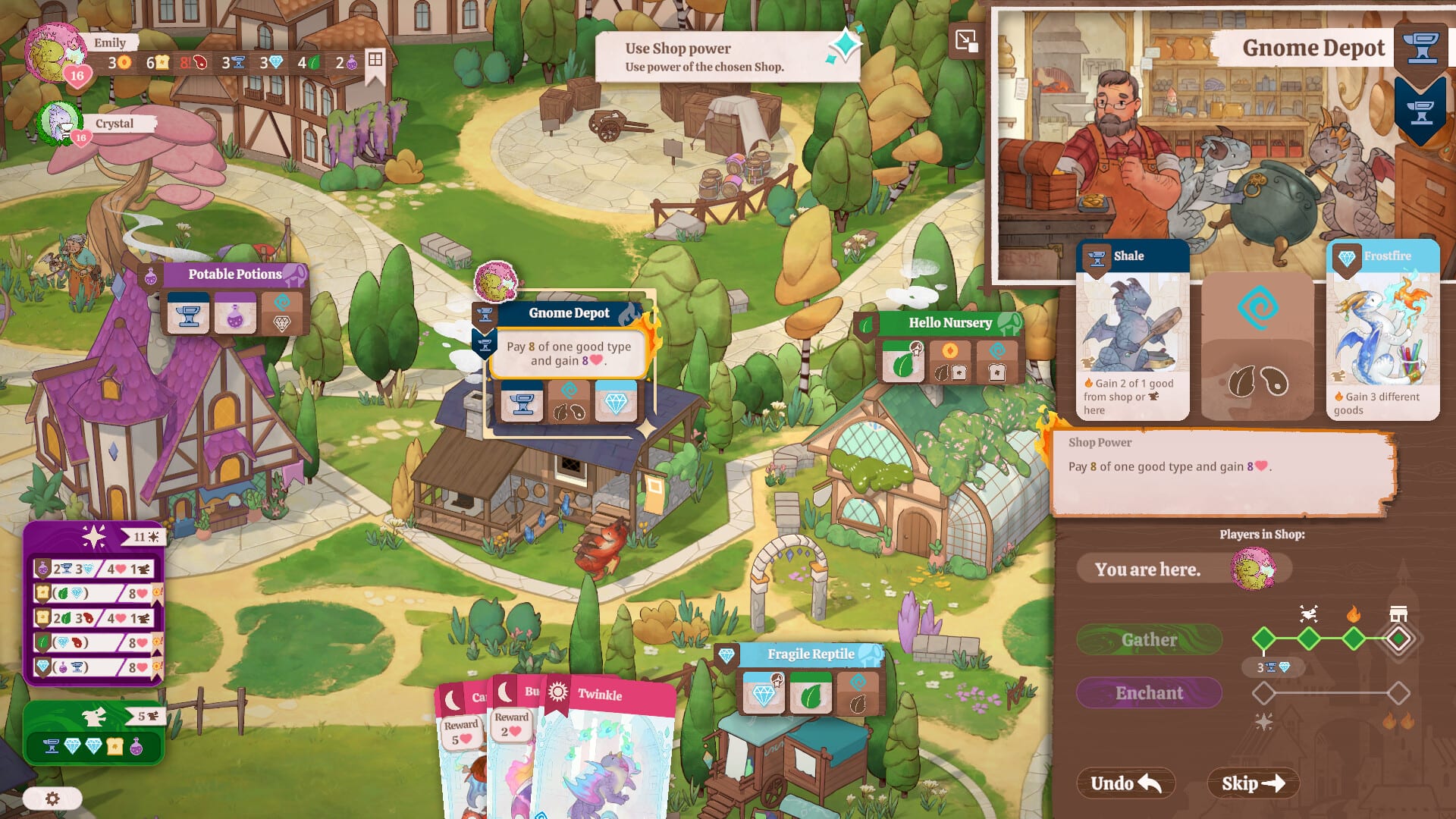
Combo strategy in Flamecraft is the art of making multiple shops, Artisan Dragons, and enchantments pay for a single Fire Up that jumps your reputation at the worst moment for everyone else. Monster Couch’s digital board game keeps the tabletop’s shared-town tension: when you telegraph a combo too early, three opponents can block one tile and collapse your math. This guide assumes comfort with How to Play Flamecraft and How to Enchant; pair it with Enchantment Timing when you need round-by-round pacing.
Define the combo’s finish line
Every combo needs a named finish: which good, which enchant level, which shop hosts Fire Up, and how many reputation steps you gain. Write that down mentally—or sketch it in the Turn Planner—before the first Gather. Combos fail when players enchant mid-chain without knowing whether Fire Up happens this round or next.
Anchor shops versus flex shops
Split the town’s 30 shops into anchors you must control and flex shops you can swap if blocked. Anchors usually hold your specialty good or a critical enchantment station referenced in Shops and Resources. Flex shops produce generic inputs other players ignore until late game. Beginners treat every shop as anchor; combo players tolerate losing flex tiles to protect anchors.
The two-action setup pattern
A reliable demo pattern is:
- Gather on an anchor to produce or retrieve a key good.
- Enchant on a linked shop (often with a Fancy Dragon bonus) to raise sale value before Fire Up.
Advanced tables insert a defensive Gather on round two—occupying a rival’s predicted enchant slot—even if that Gather is low efficiency for you. Beginner Tips cover when that trade is worth it; combo players accept small inefficiencies to preserve the anchor chain.
Multi-shop goods loops
Some Artisans want goods from shop A processed at shop B before enchantment at shop C. Map the loop physically on the board so you do not cross paths with an opponent’s loop using the same B shop. When loops collide, prioritize the player closer to Fire Up unless you can complete a cheaper Fire Up first—timing ties back to How to Win in Flamecraft.
Fancy Dragon amplifiers
Fancy profiles that reduce enchant cost or duplicate enchant effects belong late in the combo, not at the start. Place Artisans to guarantee goods, then commit Fancy actions where multiplication matters. Consult the Fancy Dragon Tier List for profiles that reward long chains versus one-shot spikes.
Denial combos
Not every combo is offensive. A denial combo blocks an opponent’s enchant shop for one round while you Gather elsewhere, then pivots into your real Fire Up when their dragons reposition. Denial is reputation-positive when it prevents a rival’s four-point swing; it is wasteful when it only slows a minor Gather.
Companions as combo glue
Companions excel at glue turns: an extra placement that completes a two-good requirement without spending a full Artisan action. Slot companions when they replace an entire round of waiting, not when they merely look busy.
Scaling to five players
At five artisans in local multiplayer, combos need shorter chains or stronger denial because anchor shops clog faster. Prefer combos that Fire Up twice for medium gains rather than one giant chain that requires three uncontested rounds. Online matchmaking in the full release may differ in pacing; treat dense tables as the default when planning.
When to abandon a combo
Sunk cost loses games. If two consecutive rounds lose anchor access, pivot to a flex Fire Up that scores less but preserves tempo. Revisit Beginner Tips if abandoning feels impossible—you may be over-enchanting sunk goods.
Study order
Read Artisan Dragons to know which loops your roster naturally supports, then rehearse one combo per demo faction until Fire Up timing feels predictable.
Frequently Asked Questions
Quick answers for new Flamekeepers.
How many shops should a combo use?
Demo-safe combos often use two or three shops. Longer chains score higher but break more often when five players contest anchors.
Should I hide my combo until Fire Up?
Hide the finish, not the Gather. Visible early Gathers are normal; revealing the exact enchant target too early invites blocks.
Do combos require Fancy Dragons?
No. Artisans alone can Fire Up reliably. Fancy dragons amplify combos but rarely create them from zero goods.
What tool helps rehearse combos?
Use the Turn Planner to draft placements before committing, especially in local multiplayer where undo is limited.