Named Shops in Flamecraft
Memorable storefronts, resource identities, and why shop names matter when you plan a turn.
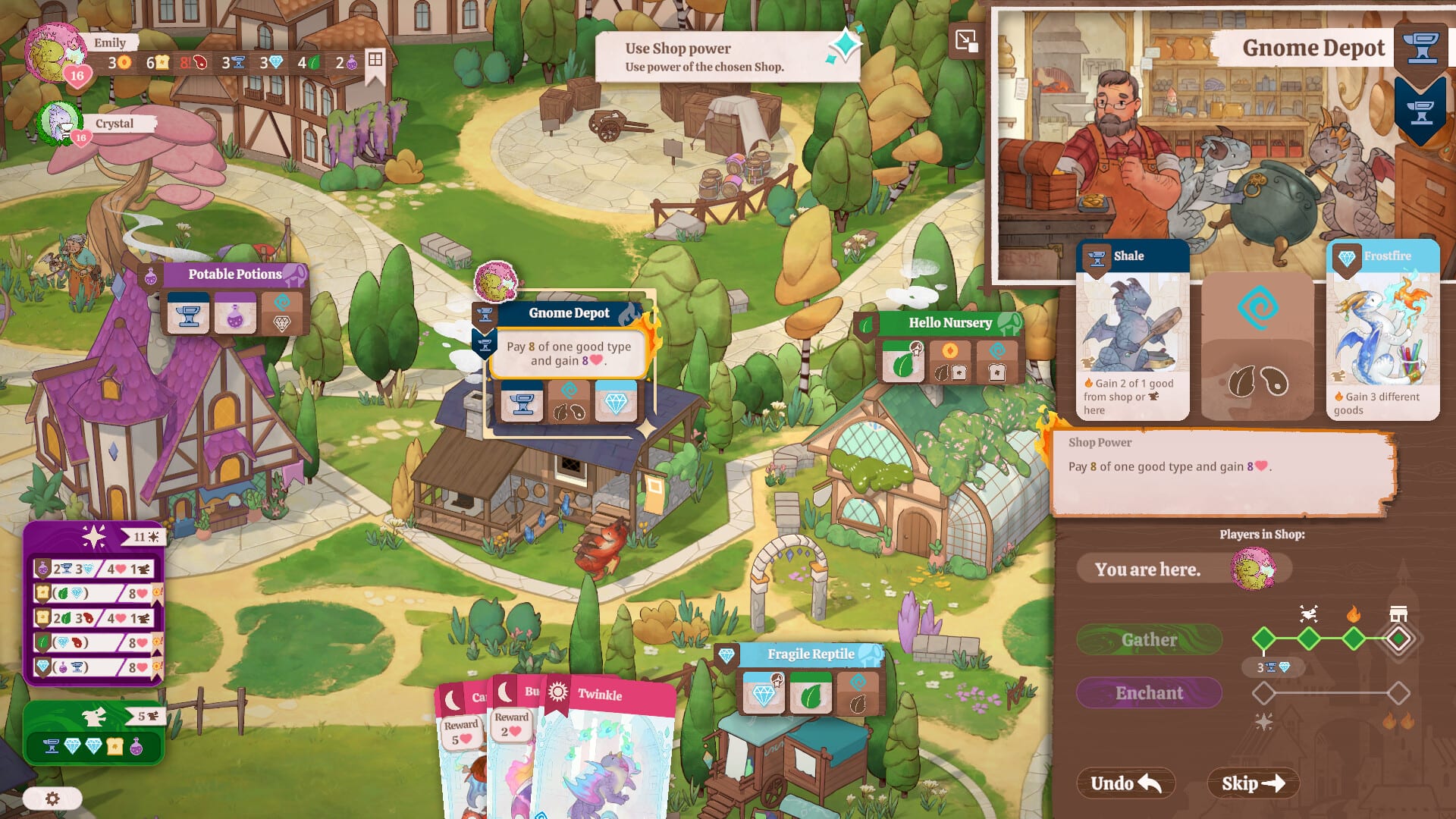
Flamecraft’s town is not a blank grid. Marketing and tutorials name storefronts—Drake of Cakes, Gnome Depot, Draconic Tonic, Guilty Treasures, Scale Mail Post, and more—so players can remember which shelves produce bread, iron, potions, or letters. This page orients you to those identities so Shops & Resources feels concrete when you open the demo.
Exact digital shop rotations change between demo and full game. Use names as memory anchors, then verify icons in your build.
Why names help more than colors alone
New Flamekeepers drown in icon soup. A bakery name tells you to expect food goods; a depot suggests metals; a tonic stall hints at potions. When How to Play says “visit a shop to Gather,” translating that into “swing by Drake of Cakes for bread” keeps the turn human.
Write personal shorthand on the Resource Checklist using shop names you actually saw this session.
Signature storefronts you will hear often
Official copy repeatedly highlights whimsical examples:
- Drake of Cakes / bakery themes — food goods for enchant recipes that want bread or sweets.
- Gnome Depot — iron and hardware vibes for construction-flavored crafts.
- Draconic Tonic — potions and bubbling concoctions.
- Guilty Treasures — sweets and indulgent crafts waiting for artisan help.
- Scale Mail Post — enchanted letters and delivery fantasy.
Tabletop solo lists also mention shops such as Maw & Paw’s, Wishing Well, Funky Brewsters, and Tip the Scales. Digital catalogs may rename, animate, or subset these; treat crossover lists as flavor until your client shows the card.
Shops as shared engines
Every enchant you tuck behind a shop improves that storefront for everyone. Naming the shop helps your table call out “do not Fire Up Gnome Depot yet” without pointing at abstract icons. That communication matters in Multiplayer pass-and-play nights.
Planning routes with names
- Identify which two named shops feed your current Fancy Dragon plan—see Fancy Dragons.
- Gather at the producer, Enchant at the processor, then Fire Up when slots fill.
- If a rival camps your bakery, pivot to an alternate named producer rather than waiting politely.
Combo ideas belong in Combo Strategy; this page only helps you recognize the landmarks.
Demo subset versus thirty shops
The full game markets 30 unique shops. The demo shows a curated neighborhood so tutorials stay focused. Do not panic if Guilty Treasures appears in a trailer but not your current scenario—check Demo Walkthrough and Release Info for scope notes.
Solo story shops
Lighthouse chapters may introduce storefronts as narrative beats. When a scene gifts a new stall, open its tooltip before celebrating—new shops change Gather geography immediately. Tie those unlocks to Achievements and Lighthouse Story.
Accessibility tip for TV play
On a living-room screen, names plus colors beat icons alone. Encourage hosts to read shop titles aloud during the first multiplayer teaching game so quieter players can track the board.
Related dragon pages
Artisan types still need matching slots—refresh Artisan Dragons after you memorize three named producers. Companions that reference shop types are covered in Companions.
Keeping this list honest
We only highlight names confirmed in official marketing, tutorials, or widely published rule materials. When Monster Couch reveals additional digital-exclusive shops, they will appear here and on the Dragons hub overview.
Practice drill
Load the demo, write down every shop name you visit in one scenario, then rebuild the same route using only those notes and the Turn Planner. If you cannot reconstruct the loop from names, you were clicking icons without building a mental map—exactly what this page tries to fix.
Next steps
Return to Shops & Resources for goods theory, How to Enchant for spending those goods, and the Guides Hub for the broader curriculum.
Frequently Asked Questions
Quick answers for new Flamekeepers.
Are all named shops available in the demo?
No. The demo uses a subset. Trailers and the full game advertise a larger catalog of about thirty shops.
Do shop names change rules?
Names are memory aids. Icons, slots, and enchant costs on the card define the rules.
Should I memorize every shop before playing?
Memorize a few producers and processors you use often. Expand the list as the demo and full game reveal more storefronts.
Where do tabletop-only shop names fit?
They are flavor cousins. Confirm each name inside your digital client before relying on it in a guide.