Solo Mode in Flamecraft
Learn the cozy dragon economy alone with story-driven scenarios.
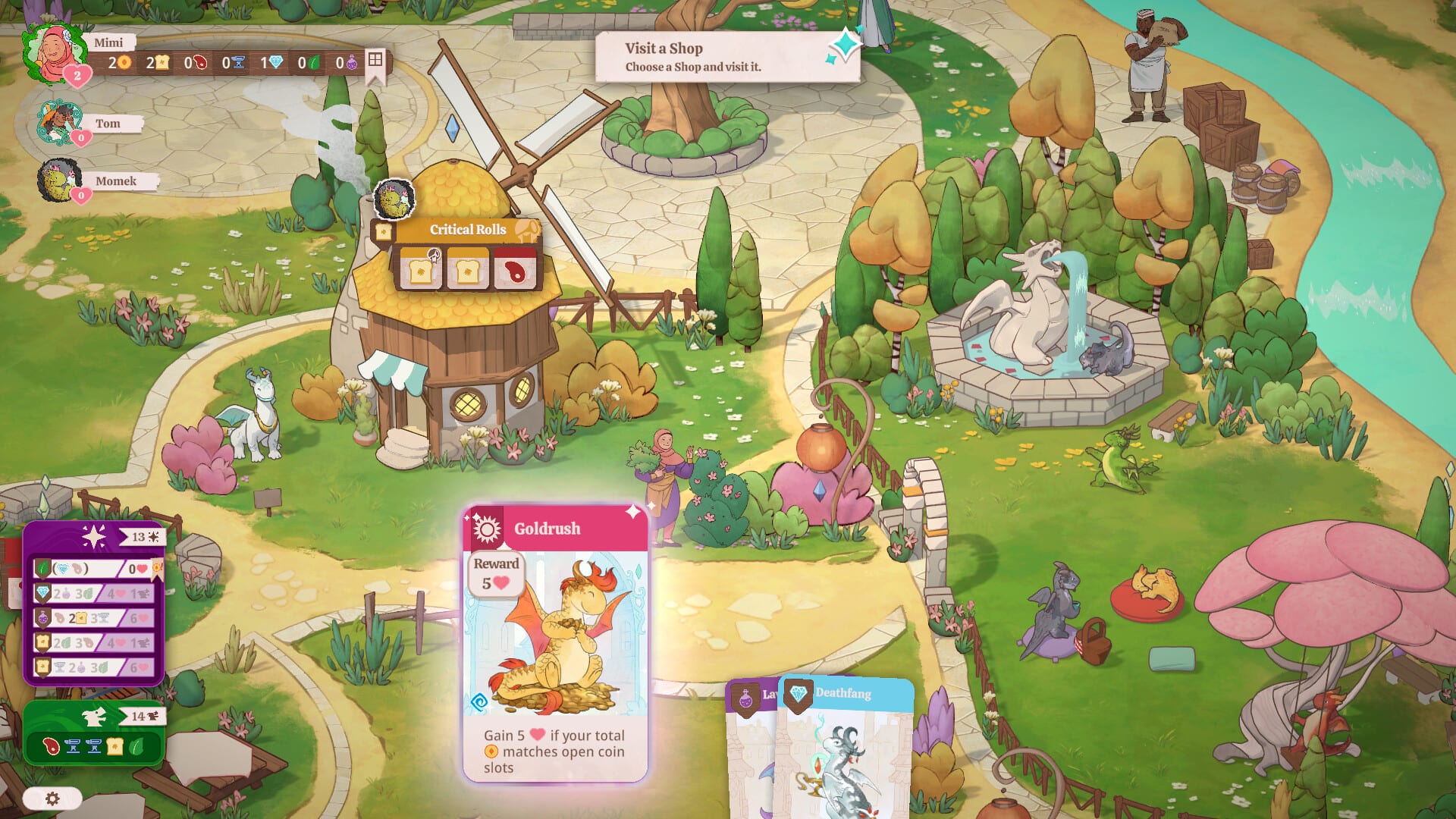
Flamecraft supports solo play as a first-class way to learn Monster Couch’s digital version of the Cardboard Alchemy board game. You still manage Artisan Dragons, Fancy Dragons, and Companions across a town of 30 shops, alternating Gather and Enchant to push reputation toward Master of Flamecraft—but opposition comes from scripted scenarios, automated rivals, or puzzle constraints instead of friends on the couch.
Marketing for the full game highlights a lighthouse narrative thread that gives solo artisans a reason to keep crafting between reputation races. The demo on Steam, PS5, Xbox Series X|S, and Switch already mixes tutorial voiceover from Becca Scott with scenarios you can replay alone; the full release (Coming soon on Steam; September 17, 2026 on Nintendo Switch at listing time) expands that story footprint alongside local multiplayer and planned online matchmaking.
How solo differs from multiplayer mentally
In local multiplayer up to five, you watch human opponents telegraph blocks and Fire Up races. Solo, the game substitutes AI pacing or scenario goals—extra reputation thresholds, shop locks, or timed objectives. You cannot negotiate trades or table talk; you read telegraphed pressure and respond with cleaner chains.
Rules verbs stay identical to How to Play Flamecraft. Strategy emphasis shifts toward efficiency and narrative milestones rather than deny plays.
Starting solo in the demo
Launch the demo, complete the narrated tutorial, then choose solo scenarios from the main menu. Follow the Demo Walkthrough if you want chapter labels while learning.
After tutorial graduation, impose a personal rule: finish one enchant chain before any optional side gather. Solo scenarios punish unfocused hoarding because AI opponents or timers advance reputation on schedules you cannot ignore.
Lighthouse story and pacing
The lighthouse framing ties solo sessions to a gentle mystery about keeping the flame alive for the town—official posts describe a beacon meant to guide distant Artisan Dragons home. Even if you skip cutscenes, notice how story beats unlock shops or companions.
For achievement thresholds and unlock planning, read Achievements and Lighthouse Story. Track additions on release info and Console Demo Launch News.
Building engines without human chaos
Solo rewards steady enchant rhythms because nobody steals your processor tile mid-round. Invest in:
- one reliable gather shop upgraded early;
- a Fancy Dragon that shortens your favorite chain—compare options on the Dragon Tier List;
- Companion triggers that shave one turn off Fire Up setup.
Deep enchant theory lives in How to Enchant in Flamecraft; winning thresholds are in How to Win in Flamecraft.
When solo is the best teacher
Play solo when you want to pause and read tooltips, test a new dragon from the tier list, or practice Fire Up double setups without social pressure. Switch to local multiplayer once you can explain Gather versus Enchant to someone else—see Multiplayer in Flamecraft.
Solo is also the low-friction mode on handheld Switch sessions where passing a device between five people is impractical.
Difficulty and scenario knobs
Expect scenario stars or difficulty selectors in the full game even if the demo offers limited tiers. Higher difficulty usually means tighter reputation clocks, more aggressive automated rivals, or reduced market generosity—not new rules you cannot learn from the base tutorial.
If a scenario feels unwinnable, revert one difficulty step and identify which shop node failed—almost always a broken enchant link, not bad luck.
Solo versus online matchmaking
Online matchmaking planned for the full release is competitive remote play, not a replacement for solo story. Phrase your expectations carefully: solo is single-player narrative and puzzles; online is matchmade tables; couch play is local multiplayer on one screen.
This wiki’s facts treat co-op style play as shared-screen local, not internet co-op.
Tools and references for solo artisans
Keep the Resource Checklist open until recipes are memorized. Install or update the demo through platforms and demo. When you want human commentary on advanced solo routes, browse Players & Creators after finishing the written guides on the Guides Hub.
Transitioning from solo to group nights
Once you beat a solo scenario with comfortable reputation margin, invite one friend for pass-and-play local multiplayer. Teach only placement and Gather first session; add Fire Up racing second session. Your solo drills then become the group’s tempo baseline.
Content boundaries
Flamecraft has no codes hub or script downloads—solo progress saves through normal platform profiles. Ignore unrelated Roblox or generator sites; they are not this game.
Frequently Asked Questions
Quick answers for new Flamekeepers.
Can I play Flamecraft alone?
Yes. Solo mode includes story-oriented scenarios with lighthouse themes and AI or puzzle opposition instead of human rivals.
Does solo use the same rules as multiplayer?
Gather, Enchant, Fire Up, and reputation rules match multiplayer. Solo swaps human opponents for scenarios or automated pacing.
Is the lighthouse story in the demo?
The demo introduces solo-friendly tutorial and scenarios. Full story chapters are expected to expand in the upcoming release.
Should I learn solo before local multiplayer?
Solo is ideal for learning tooltips and enchant chains without pressure, then local multiplayer for blocking and race timing.