Flamecraft Dragons Hub
Know every worker, enchantment partner, and shop tile before you claim Master of Flamecraft.
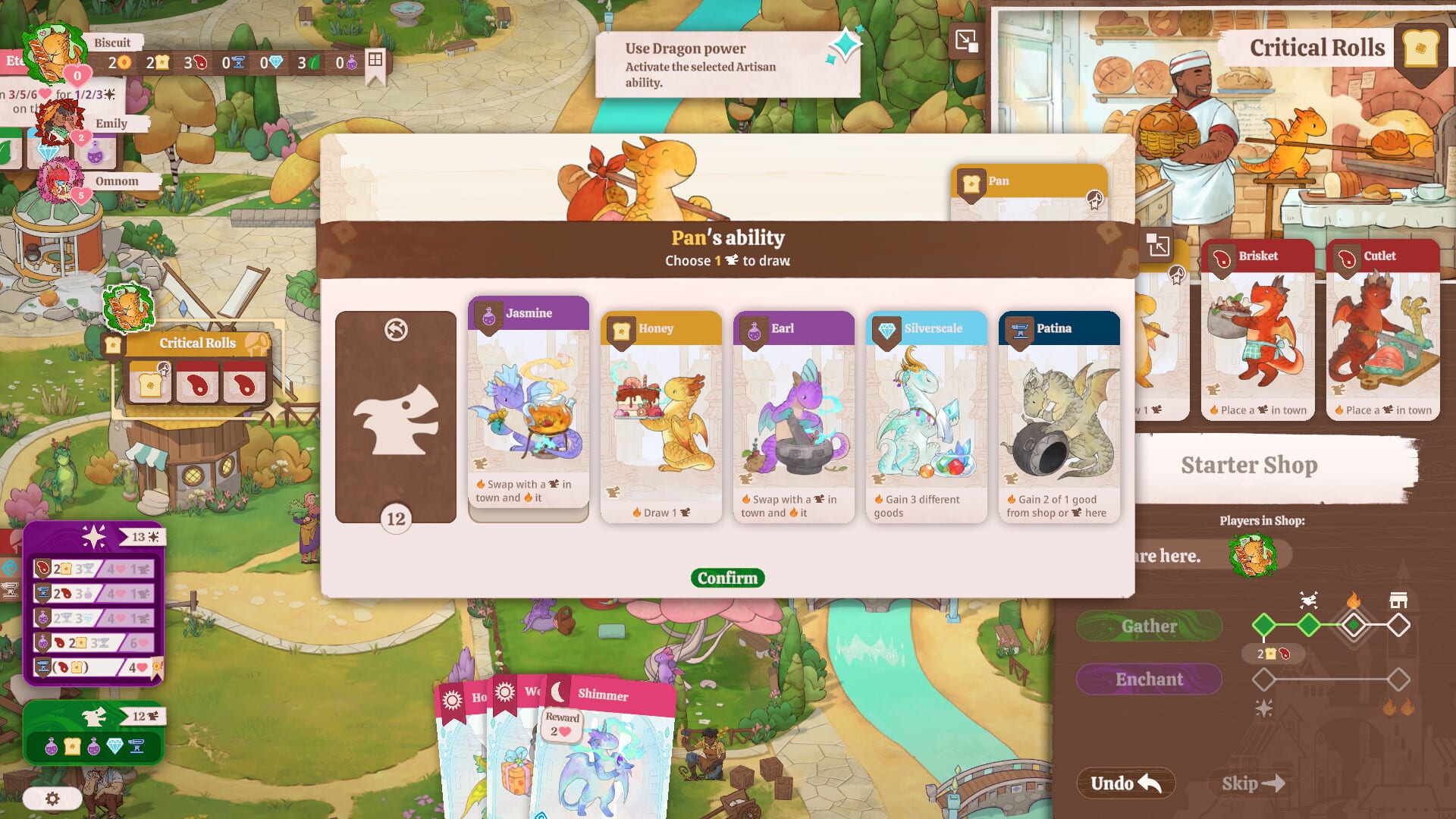
Browse Named Shops when you need landmark storefronts such as Drake of Cakes or Gnome Depot.
Flamecraft’s charm is watching Artisan Dragons, Fancy Dragons, and Companions bustle through a shared town, but wins come from knowing what each profile actually produces on the board. Monster Couch’s digital board game adapts the tabletop design from Cardboard Alchemy; the demo already showcases core roster interactions while the full release approaches September 17, 2026 on Nintendo Switch and other platforms. This Dragons Hub is the reference layer for who does what—pair it with How to Play Flamecraft for rules and the Strategy Hub for priorities.
Dragons are workers you place on shops to Gather, Enchant, and prepare goods for Fire Up reputation scoring. None of them score alone; they need the town’s 30 shops and the resource flows documented in Shops and Resources.
Artisan Dragons — production backbone
Artisan Dragons in Flamecraft are your reliable goods engines. Each profile favors certain shop types or recipes, shaping which combos you can run from Combo Strategy. New players should read Artisans before Fancy profiles because enchantments multiply existing goods—they do not create them from thin air.
Fancy Dragons — enchantment specialists
Fancy Dragons in Flamecraft bend enchant costs, sale values, or action order. They appear on the Fancy Dragon Tier List when you need competitive opinions, but the Dragons hub page explains identity and pairing rules without tier jargon.
Companions — efficiency helpers
Companions in Flamecraft grant smaller placements or rule tweaks that fix tempo problems—extra Gather on a crowded tile, cheaper movement, or support for solo scenarios. Veterans ignore them; optimized tables treat them as action glue between Artisan and Fancy turns.
Shops and resources — where dragons stand
Shops and Resources maps tile names to goods, enchant stations, and ownership perks. Strategy articles assume you can translate “I need this Artisan” into “I need these two shops free for three rounds.” Cross-link this page whenever a dragon profile mentions a specialty good you do not recognize from the tutorial with Becca Scott.
How dragons interact with guides and tools
- How to Enchant — rules Fancy dragons exploit.
- How to Win — reputation outcomes your roster must feed.
- Turn Planner — draft placements before committing dragons in local multiplayer.
- Beginner Tips — roster mistakes that waste Fancy recruitment.
Demo scope versus full release
Demo rosters are smaller than the promised full campaign. Profiles listed here reflect demo visibility plus publicly shown previews; unknown dragons stay out until confirmed. When pre-release notes add roster members, update your personal notes and check release info for patch timing.
The full game also plans online matchmaking in addition to couch play; dragon identities do not change between modes, but table density does—expect more shop blocking when five artisans meet online or on one screen.
Suggested reading order
Artisan Dragons → Shops and Resources → Fancy Dragons → Companions, then revisit Fancy Dragon Tier once you can name your demo main Artisan without looking at the card.
Frequently Asked Questions
Quick answers for new Flamekeepers.
What is the difference between Artisan and Fancy dragons?
Artisans primarily produce and move goods through shops. Fancy dragons specialize in enchantment bonuses that increase sale value or reduce enchant costs.
Do Companions count toward worker limits?
Companions follow companion rules shown in the demo tutorial; treat them as separate efficient actions rather than full Artisan replacements.
Which dragons page should I read first?
Start with Artisan Dragons, then Shops and Resources so specialty goods make sense before you read Fancy profiles.