Multiplayer in Flamecraft
Couch sessions, bot drills, and how Short, Long, and Custom online queues fit the full game.
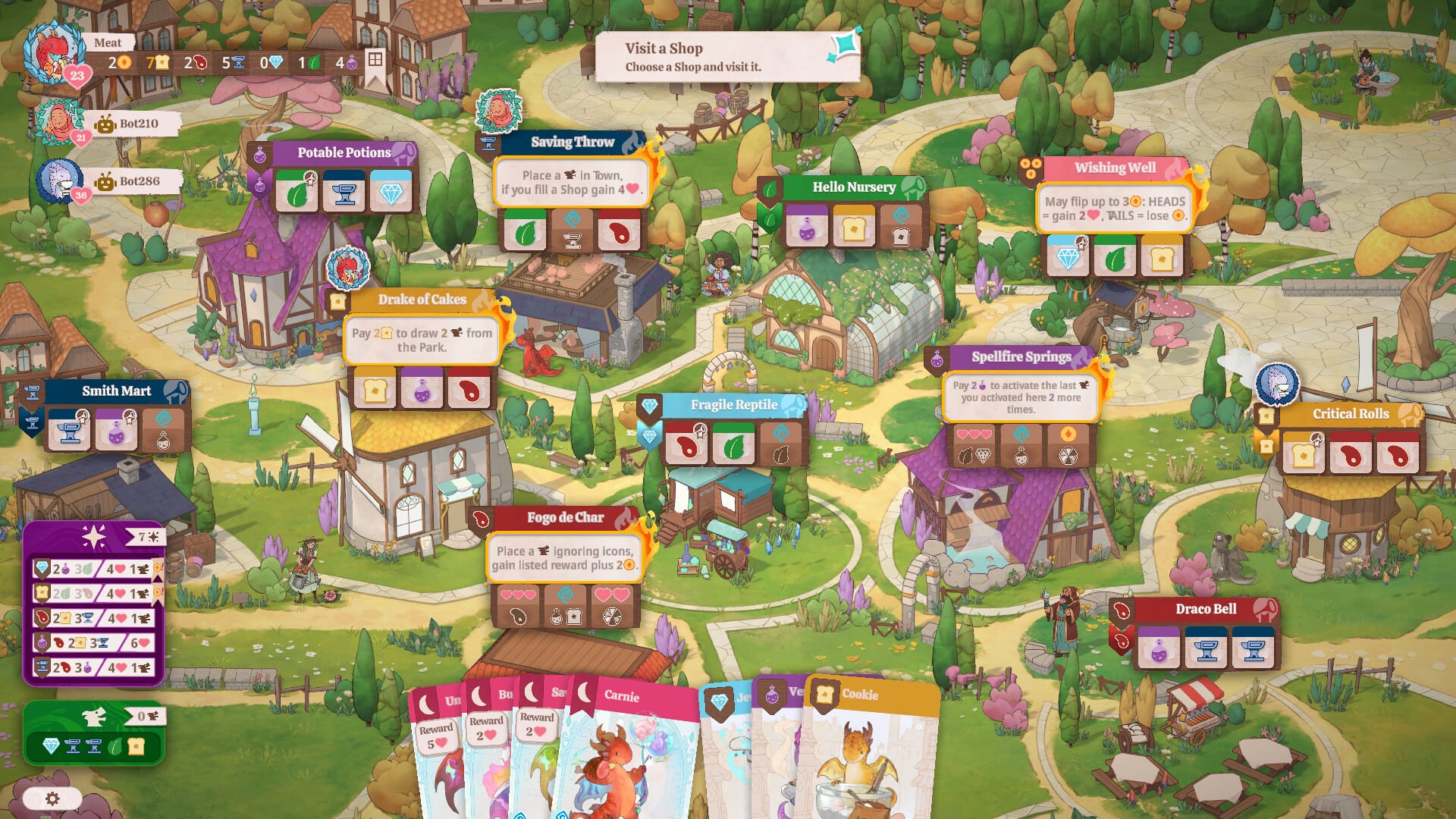
Flamecraft is built for shared tables. The digital adaptation of the Cardboard Alchemy board game from Monster Couch supports 1–5 players, and the primary social experience at launch is local multiplayer: one console or PC, one screen, pass-and-play turns with Artisan Dragons, Fancy Dragons, and Companions competing for reputation and the Master of Flamecraft title. Understanding that split—couch play now, online matchmaking planned for the full game—keeps expectations aligned with official facts and keeps remote play clearly labeled as online matchmaking.
Local multiplayer: the default party mode
Local multiplayer means everyone shares a device. After you configure player count, the game typically hides hands or resources between turns so secrets stay intact on a single screen. Turns proceed in order; each player places dragons on 30 shops, chooses Gather or Enchant, and sets up Fire Up when ready.
This matches how board-game nights work: one box, one table, sequential decisions. Flamecraft adds automation for recipe tracking and reputation math.
Setup tips:
- Sit where glare does not hide shop tooltips.
- Agree on a pause rule for enchant planning—chains are easier to misclick under social pressure.
- Start with two players before jumping to five; blocking logic scales sharply with more artisans.
If anyone has not finished the Becca Scott tutorial in the demo, run Demo Walkthrough together first.
Pass-and-play etiquette
Pass-and-play relies on trust. Do not peek during another player’s turn unless the UI intentionally shows public markets. When handing off the controller:
- confirm end of turn in the menu so partial actions do not leak;
- narrate only public information—do not coach hidden plans unless you are playing casual;
- use How to Play Flamecraft as a neutral rules reference for disputes.
Reputation swings from Fire Up end friendships temporarily—that is feature, not bug.
What one to five players changes strategically
More players compress shop access. With five artisans, showcase tiles and processors become negotiation-by-placement: you occupy nodes rivals need or accept tax-like detours. Two-player games reward long engine builds; five-player games reward opportunistic Fire Ups when the board clogs.
Study How to Win in Flamecraft with your usual player count in mind. How to Enchant in Flamecraft matters more as count rises because incomplete chains get stolen by occupancy.
Solo mode is separate
Solo mode with lighthouse story content is single-player—no pass-and-play required. It is the best onboarding path before hosting a couch session. Details sit in Solo Mode in Flamecraft.
Bots: three difficulty levels in the demo
Official July 2026 materials confirm the demo includes bot opponents across three difficulty levels. Use bots to rehearse Fire Up timing before inviting humans. The Bot Practice Planner turns those matches into focused drills.
Bots are not a substitute for lighthouse solo achievements—keep story unlocks in Achievements and Lighthouse Story.
Online matchmaking in the full game
Official messaging for the full game—still upcoming with Steam Coming soon and Nintendo Switch listing September 17, 2026—includes online matchmaking so you can find remote tables without everyone owning the same couch. PlayStation Blog copy specifically calls out Short Matchmaking, Long Matchmaking, and Custom Online Games. That is network play, not shared-screen local multiplayer.
When matchmaking arrives, expect separate menus from solo story and from local setup. Patch notes should land on release info and Console Demo Launch News first.
Until then, organize remote nights by scheduling simultaneous local sessions on your own devices only if every player owns the client—still not the same as built-in matchmaking.
Demo multiplayer scope
The demo on Steam, PS5, Xbox Series X|S, and Switch supports learning sessions with multiple human profiles on one device where the build allows. Content caps may truncate scenarios compared with 1.0. Verify your platform build via platforms and demo.
Teaching new players at the table
Host plan:
- Everyone runs tutorial segments solo or watches one host play.
- First match ignores optional advanced shops—focus on one gather-enchant-Fire Up triangle.
- Second match introduces Fancy Dragons from the Dragon Tier List with pre-agreed picks to avoid analysis paralysis.
Use the Resource Checklist as a shared paper reference if the UI feels cramped on TV mode.
Hardware and platform notes
Switch handheld mode suits two-player commutes; docked mode fits five-player living rooms. PC players may prefer mouse precision for dense shop maps. None of these choices change rules—only input comfort.
Fair play and community
Flamecraft has no scripts page on this wiki and no Roblox tie-in. Multiplayer integrity means using official clients only. For creator-led house rules or tournament ideas, see Players & Creators.
Where to go next
Return to the Guides Hub for enchant and win guides. Compare dragon picks on the tier list. Track launch features that affect matchmaking on release info.
Frequently Asked Questions
Quick answers for new Flamekeepers.
How many players can play local multiplayer in Flamecraft?
Local multiplayer supports up to five players on one device with pass-and-play turns.
Does Flamecraft support remote multiplayer yet?
Official plans describe online matchmaking for remote tables in the full game. Shared-screen play today is local multiplayer.
Can I play multiplayer in the demo?
The demo supports learning local sessions where the build allows multiple players on one device. Content may be limited compared with the full game.
What is the difference between local multiplayer and online matchmaking?
Local multiplayer is one screen and one device. Online matchmaking finds remote opponents through the full game’s network features.
How many bot difficulties are in the demo?
Official materials describe three bot difficulty levels for practice matches.